
Common Names: Sheep sorrel, red sorrel, field sorrel, sour weed and sour grass.
Scientific Name: Rumex Acetosella – Native to Eurasia and the British Isles, the plant and its subspecies are common perennial weeds. [1]
Family: Polygonaceae – a family of flowering plants known informally as the knotweed family or smartweed – buckwheat family in the United States.
Higher Classification: Dock – perennial plants that grow from taproots to produce tart to lemony flavored leaves that are highly nutritious and flavorful.
Order: Caryophyllales – ecologically specialized to tolerate salty or desert-like environments, making them especially helpful to grow in drought -prone areas. [2]
Identifying Sheep Sorrel
Located throughout most of the Northern Hemisphere, sheep sorrel is commonly found in acidic, often sandy soils. You’re likely to find it close to where blueberries are grown, as they like similar growing conditions.
The plant itself typically reaches around 18 inches, and has a reddish stem that branches at the top. Sheep sorrel leaves are described as narrow and pointed with distinctive tails where the leaf joins the stalk and the plant can grown 12-18″ (30-45 cms) in height. It may either have maroon or white (or both) flowers when blooming.
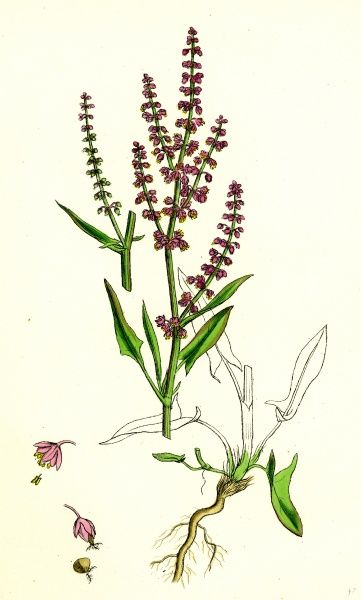


Sheep sorrel is often mistaken for garden sorrel, or Rumex Acetosa. One major difference is the size of the leaves, which are much larger than sheep sorrel, or Rumex Acetosella. Compare the differences in the plant structure and leaf sizes from the pictures above.


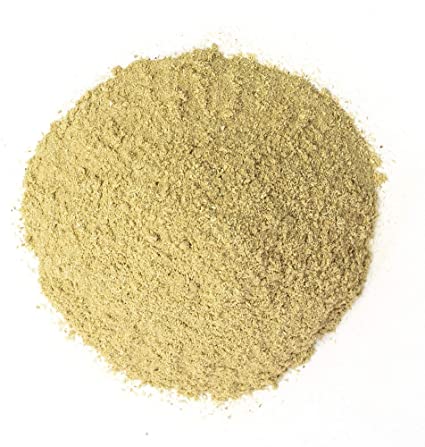
Sheep sorrel (Rumex Acetosella) is an important component to essiac tea. It is harvested and dried, then either left coarse or found powdered in essiac tea mixtures. Make sure when purchasing essiac tea you ensure they include the sheep sorrel roots in their mixture. Check out our list of approved vendors HERE.


Resources
[1] Stace, C. A. (2010). New Flora of the British Isles (Third ed.). Cambridge, U.K.: Cambridge University Press. p. 450. ISBN 9780521707725.
[2] Encyclopaedia Britannica; Caryophyllales – Description, Characteristics & Taxonomy https://www.britannica.com/plant/Caryophyllales
MEDICAL DISCLAIMER
This web site is not designed to, and does not, provide medical advice. All content, including text, graphics, images and information available on or through this web site are for general informational purposes only. The content is not intended to be a substitute for professional medical advice, diagnosis or treatment. You take full legal responsibility for whatever decisions you make regarding your own health care. This material is offered solely for educational purposes. The suggestion is that you think clearly for yourself and make your own decisions, with the input of a licensed health professional should you choose to consult one.
 Essiac Library