What is Inflammation?
Inflammation is the body’s natural immune response to harmful stimuli, such as injury, infection, or irritants, aimed at eliminating the cause of cell injury and initiating tissue repair. It involves white blood cells releasing chemicals that increase blood flow to the affected area to initiate healing.
Types of Inflammation
Acute and Chronic
Acute inflammation is short-lived and has a normal reaction time lasting hours to days to clear invaders and repair tissue. Acute inflammation is essential for survival
Chronic inflammation persists for months of years and can harm healthy tissues. Chronic inflammation is linked to serious conditions such as autoimmune diseases, cardiovascular disease, cancer, and neurodegenerative disorders.
Internal and External
Location and visibility help categorize inflammation by external (surface) and internal types.
External inflammation occurs on the body’s surface, such as a cut or burn and typically presents with the 5 cardinal signs (see below).
Internal Inflammation occurs within organs and tissues, where signs like heat and redness are often absent or unobservable because the tissue is already at core body temperature. See below for the often ‘silent’ symptoms of internal inflammation.
Signs of Inflammation
There are 5 signs of external inflammation and many more ‘silent’ signs of internal inflammation. These signs represent the body’s immune response to injury, infection, or irritation, characterized by increased blood flow, fluid accumulation, and chemical mediator release.
External Inflammation Symptoms:
- Redness (Rubor) and Heat (Calor) both result from vasodilation and increased blood flow to the injured area.
- Swelling (Tumor) occurs due to the accumulation of fluid (edema) and plasma proteins leaking from blood vessels.
- Pain (Dolor) is caused by the release of chemicals like bradykinin and histamine that stimulate nerve endings.
- Loss of Function (Functio laesa) arises from a combination of factors, including pain, severe swelling, and tissue damage.
Internal Inflammation Symptoms:
- Neurological: Brain fog, memory issues, balance problems, migraines, headaches
- Digestive: Abdominal pain, bloating, diarrhea, constipation, acid reflux
- Musculoskeletal: Joint stiffness, muscle weakness, lower back pain, tendonitis
- Cardiovascular: Hardening of arteries (arteriosclerosis), increased blood clotting risk
- Metabolic: Insulin resistance, blood sugar imbalances, weight gain
- Dermatological: Livedo reticularis (marbled rash), acne, dry skin, psoriasis
- General: Chronic fatigue, fever, dry eyes, mood disorders
Causes of Inflammation
Common triggers for chronic inflammation include:
- Obesity
- Chronic Stress
- Poor sleep
- Smoking
- Excessive alcohol consumption
- Diets high in trans fats and sugar.
Can Chronic Inflammation be reversed or managed?
YES. Inflammation – especially chronic inflammation – can often be managed and even reversed through natural lifestyle and dietary changes. There are 4 main categories to help manage and possibly reverse chronic inflammation.
1. Anti-Inflammatory Diet
Diet plays a central role in regulating inflammation. Key components include:
- Omega-3 fatty acids: Found in fatty fish (salmon, mackerel), flaxseeds, and walnuts, they reduce the production of inflammatory molecules.
- Fruits and vegetables: Rich in antioxidants and polyphenols, especially berries, cherries, spinach, and broccoli.
- Whole grains: Such as oats and brown rice, which help stabilize blood sugar and reduce inflammatory markers.
- Healthy fats: Olive oil, avocados, and nuts (especially almonds and walnuts) contain monounsaturated fats and compounds like oleocanthal, which have anti-inflammatory effects.
- Herbs and spices: Turmeric (curcumin), ginger, garlic, rosemary, and cinnamon are potent natural anti-inflammatories.
Avoid or Limit:
- Refined carbohydrates (white bread, pastries)
- Sugary beverages
- Red and processed meats
- Trans fats and excessive omega-6 oils (e.g., corn, soybean oil)
2. Herbs and Supplements
- Turmeric – includes curcumin, which reduces joint pain, inhibits inflammatory pathways; best absorbed with black pepper
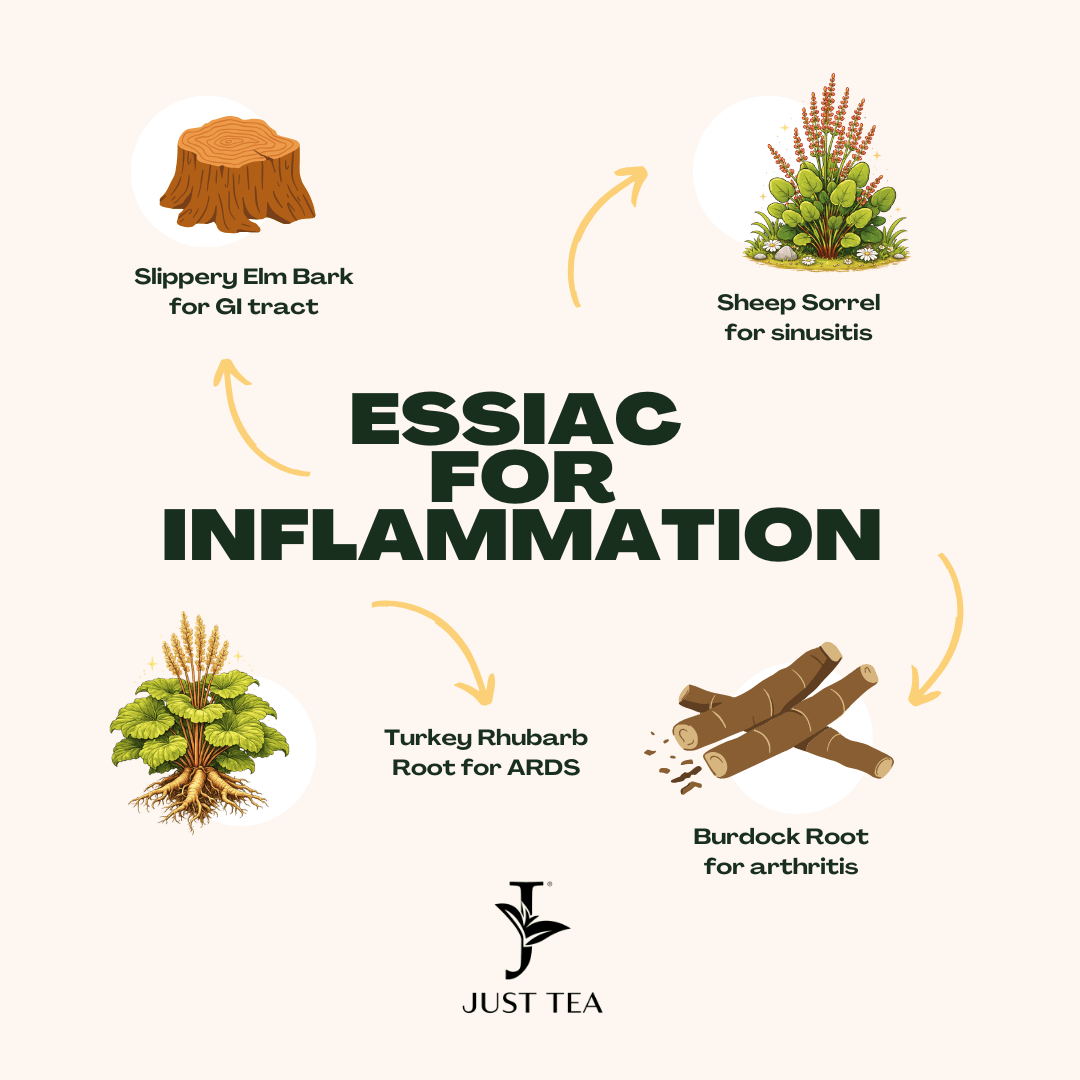
- Essiac – Find a more in depth section on the topic below. Sheep sorrel is used to manage inflammation due to its rich content of antioxidants, flavonoids, and phenolic acids. Burdock is well documented in it’s anti-inflammatory properties. Turkey Rhubarb is also known to have significant anti-inflammatory properties, supported by both traditional and modern research. Slippery elm demonstrates anti-inflammatory effects, particularly in the GI tract.
- Ginger – includes gingerols, which ease arthritis and reduce muscle soreness
- Green Tea – includes EGCG, which is an antioxidant that suppresses inflammatory genes
- Boswellia – key compound is boswellic acids, which help with arthritis and inflammatory bowel conditions
- Omega 3’s – include EPA and DHA, compounds that lower CRP and other inflammatory markers
3. Lifestyle Modifications
- Exercise: Regular physical activity (30+ minutes most days) lowers inflammatory markers like C-reactive protein (CRP).
- Weight loss: Excess fat, especially visceral fat, produces pro-inflammatory cytokines; losing weight reduces these.
- Stress management: Chronic stress elevates cortisol and inflammation. Practices like meditation, yoga, and deep breathing help.
- Sleep: Poor sleep quality is linked to higher inflammation; aim for 7–9 hours per night.
- Avoid smoking and limit alcohol: Smoking increases inflammation, while moderate alcohol (e.g., one glass of wine daily) may have anti-inflammatory effects.
4. Monitoring and Professional Guidance
While natural methods are effective, it’s important to:
- Get blood tests (like hs-CRP) to monitor inflammation levels.
- Consult a healthcare provider before starting supplements, especially if on medications (e.g., blood thinners).
Chronic inflammation can be significantly reduced—and in many cases reversed—through a combination of an anti-inflammatory diet, targeted herbs, regular exercise, and stress reduction.
Essiac and Inflammation
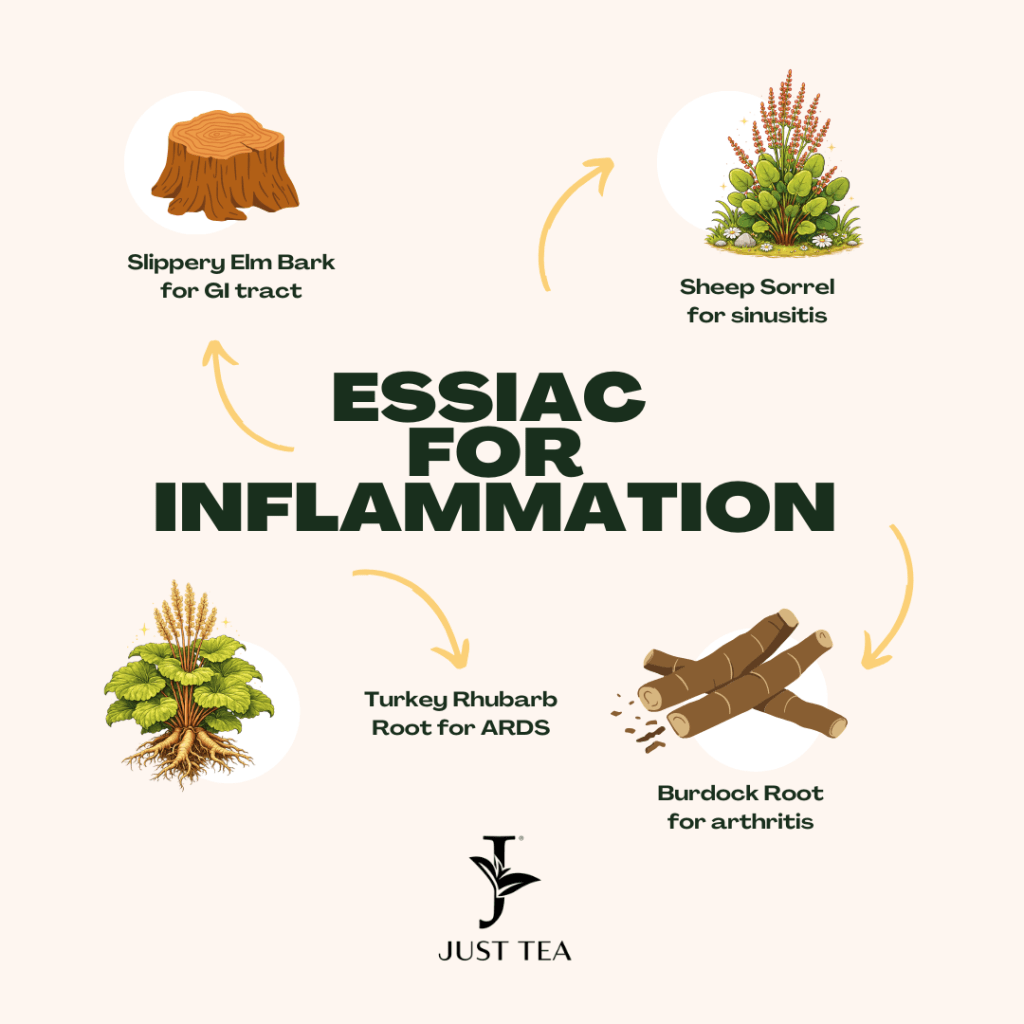
- Sheep sorrel (Rumex acetosella) has been traditionally used to help manage inflammation, and modern sources suggest it possesses anti-inflammatory properties, primarily due to its rich content of antioxidants, flavonoids, and phenolic acids. These compounds help reduce oxidative stress and may inhibit inflammatory pathways in the body. It has been used in herbal medicine to soothe inflammatory conditions such as arthritis, digestive irritation, and sinusitis. Tannins in sheep sorrel are believed to contribute to its anti-inflammatory effects by reducing mucus production and calming irritated tissues.
- Burdock root (Arctium lappa) has well-documented anti-inflammatory properties, supported by both traditional use and modern scientific research. Active compounds like arctigenin, arctiin, and caffeoylquinic acids inhibit pro-inflammatory pathways, including NF-κB, COX-2, and cytokines such as TNF-α, IL-6, and IL-1β. A human clinical trial showed that drinking burdock root tea daily for six weeks significantly reduced IL-6 and hs-CRP (key inflammation markers) in patients with knee osteoarthritis. Animal studies confirm its effectiveness in reducing inflammation in conditions like arthritis, colitis, and gastric ulcers. Topical formulations (e.g., emulgels) also show anti-inflammatory activity, lowering PGE-2 and TNF-α in skin inflammation models.
- Turkey rhubarb (Rheum palmatum), also known as Chinese or Indian rhubarb, has significant anti-inflammatory properties, supported by both traditional use and modern research. Its root contains anthraquinones (e.g., rhein, emodin) and tannins, which inhibit pro-inflammatory pathways like NF-κB, TNF-α, IL-6, and IL-17. Studies show it reduces inflammation in conditions such as psoriasis, arthritis, and acute respiratory distress syndrome (ARDS). It helps maintain gut barrier function, reducing endotoxemia and systemic inflammation. Used in traditional Chinese medicine to clear heat, cool blood, and resolve stasis, often for inflammatory and digestive disorders.
- Slippery elm (Ulmus rubra) has demonstrated anti-inflammatory effects, particularly in the gastrointestinal tract. Its primary mechanism involves mucilage, a gel-forming polysaccharide in the inner bark, which: Forms a protective coating over mucous membranes, shielding them from acid and irritants. Reduces inflammation by interacting with gut-associated lymphoid tissue and lowering pro-inflammatory markers like oxygen free radicals. Research shows: Slippery elm produced a nearly equal anti-inflammatory response compared to 5-aminosalicylic acid in patients with ulcerative colitis. It helps manage irritable bowel syndrome (IBS), acid reflux, and sore throats by soothing inflamed tissues. It also contains tannins and phytochemicals with antioxidant and astringent properties that further support its anti-inflammatory action.
Here’s our list of recommended Essiac Vendors
References
What is Inflammation?
https://pmc.ncbi.nlm.nih.gov/articles/PMC11592557/
https://pmc.ncbi.nlm.nih.gov/articles/PMC11592557/
https://my.clevelandclinic.org/health/symptoms/21660-inflammation
https://www.scripps.org/news_items/4232-six-keys-to-reducing-inflammation
https://painzorb.com/blogs/the-science-behind-the-relief/burdock-root-clinical-research
https://www.mskcc.org/cancer-care/integrative-medicine/herbs/burdock
https://www.sciencedirect.com/science/article/pii/S0753332222014937
Top 10 Health Benefits Of Turkey Rhubarb
https://pmc.ncbi.nlm.nih.gov/articles/PMC5446460/
https://sciencedirect.com/topics/medicine-and-dentistry/ulmus-rubra
Slippery elm: an effective anti-inflammatory agent

