What are PD-L1 and PD-1 and why does it matter?
PD-L1 (programmed cell death ligand 1) is a protein in certain healthy cells. While PD-L1 is found in normal cells, it’s also found on some types of cancer cells, and in higher-than-normal levels.
PD-1 (programmed cell death protein 1) is a type of protein found in the body’s T-cells that helps regulate the immune system.
When the two proteins bind together, this creates an immune system checkpoint and tells the T cells to stop destroying cells that contain PD-L1, which may include certain cancer cells. This can in turn cause tumor growth.
Higher PD-L1 levels in a tumor suggest cancer cells are using the PD-L1/PD-1 pathway to evade immune detection. Blocking this interaction can allow the immune system to better target and destroy tumors caused by this pathway.
What is a PD-L1 test and what is it used for?
A PD-L1 test uses a sample of cancerous tumor tissue to measure the levels of a protein called PD-L1 is found on the cancer cells. Normally, PD-L1 is found on healthy cells that acts as a checkpoint to stop cells in your immune system, called T cells, from attacking healthy cells in your body. If cancer cells have high amounts of PD-L1, they can render the T cells ineffective, causing tumor growth.
If a high PD-L1 count is found in tumors, immunotherapy is most often used as a treatment to block the PD-L1/PD-1 pathway which allows the immune system to find and attack cancer cells.
Essiac and it’s role in PD-L1 and PD-1
It’s briefly mentioned above, but when high levels of PD-L1 are found in tumors immunotherapy is most often recommended. Where does that leave herbal remedies such as Essiac? An in-depth research was composed listing common natural compounds.
The following is a LOT of information, but for the sake of compounds found in Essiac, we’ll make sure to highlight those for you and list which of the 4 herbs contain the compound. As a reminder, Essiac contains Burdock Root, Sheep Sorrel, Slippery Elm and Turkey Rhubarb root.
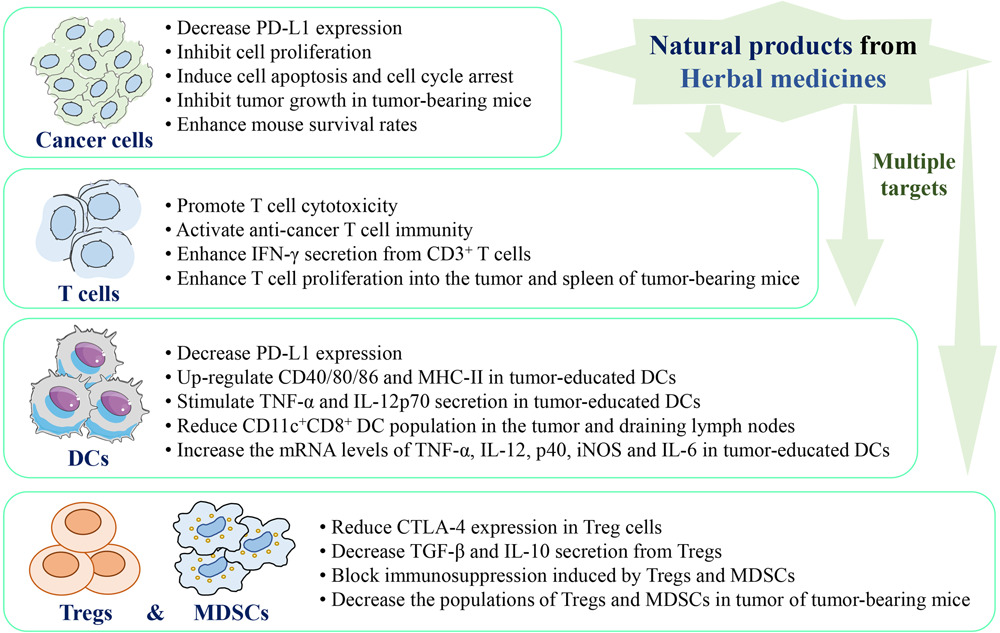
“Herbal medicines have been widely used as adjuvant [enhancing] agents for cancer treatment and can also enhance the sensitivity of chemotherapeutic resistance. Moreover, several naturally bioactive compounds isolated from herbal medicines have been shown to modulate immune checkpoints in tumors, as well as promoting anticancer immunity.” [1]
1. Apigenin
Apigenin is a naturally occurring flavonoid found widely in many fruits, vegetables, herbs and beverages, with the highest concentrations typically found in their dried forms. It can adjust T-cell immunity in breast, lung, and pancreatic cancer, and regulate cells in melanoma.
Sources of apigenin are: dried and fresh parsley, dried chamomile flowers, chamomile tea, celery and vine spinach. Other notable sources include: vegetables such as artichokes, rutabagas, thyme and bell peppers. Fruits such as kumquats, oranges, grapefruit, and apples (with skin). Other herbs and seasonings such as oregano, basil, mint, marjoram and foxglove and herbal infusions containing yarrow and thyme. Beverages such as red wine and beer as well as other items such as wheat sprouts, honey, and propolis.
Apigenin is present in burdock root.
2. Berberine
Berberine is a compound found primarily in the roots, rhizomes, and stem barks of several plants used in traditional medicine. Berberine is directly related to reducing immunosuppressive cells and inducing antitumor activities.
Sources of berberine are: barberry, goldenseal, Oregon grape, tree turmeric, Chinese goldthread, phellodendron.
Berberine is present in turkey rhubarb, particularly in the root and rhizome.
3. Chrysophanol
Chrysophanol is a key bioactive component in several traditional Chinese medicines and is known for its laxative, anti-inflammatory, antimicrobial, and potential anticancer properties.
Sources of chrysophanol are: rhubarb species, senna species, aloe species, buckthorn species and rumex species as well as various insects, fungi and lichens.
Chrysophanol is present in turkey rhubarb and sheep sorrel, particularly in the root and rhizome.
4. β-Elemene
β-Elemene is a compound clinically recognized for its broad-spectrum antitumor activity.
Sources of β-Elemene are: found in the essential oils of celery, mint, magnolia figo, among others.
β-Elemene is present in burdock and turkey rhubarb.
5. Gallic acid
Gallic acid is known for its strong antioxidant, anti-inflammatory, antimicrobial, and anticancer properties.
Sources of gallic acid are: grapes, mangoes, pomegranates, berries, guava, walnuts, cashews, hazelnuts, green tea, black tea, red wine, coffee, hot chocolate, cloves, flax seeds, certain mushrooms.
Gallic acid is present in sheep sorrel, turkey rhubarb and burdock root.
6. β-Glucans
β-Glucans are polysaccharides known for their soluble fiber content and are associated with health benefits such as lowering cholesterol, regulating blood sugar, and modulating the immune system.
Sources of β-Glucans include cereals like oats and barley, rye, wheat and sorghum, baker’s yeast, and medicinal mushrooms like shiitake, maitake, and reishi as well as seaweed and algae.
β-Glucans are present in sheep sorrel, burdock root, and slippery elm.
7. Resveratrol
Resveratrol is a natural polyphenol and phytoalexin produced by plants in response to stress or injury. Known for its antioxidant, anti-inflammatory, and potential cardioprotective effects. It is widely studied for its possible roles in aging, metabolic health, and neuroprotection.
Sources of resveratrol include: skin of red grapes, red wine, blueberries, raspberries, mulberries, peanuts, cocoa, apples, plums, tangerines, peaches, walnuts, and itadori tea.
Resveratrol is present in sheep sorrel and turkey rhubarb.
Summary
Each of the above natural compounds are known to support proper immune system function, including the PD-L1 and PD-1 binding as mentioned above. For an in-depth view of the functions of each of those compounds please refer to the reference links below.
In Summary, Essiac compounds support the regulation of immune system function, making it a powerful anticancer, antioxidant and anti-inflammatory tea.
View our recommended Essiac vendor list HERE.
Resources
https://frontiersin.org/journals/immunology/articles/10.3389/fimmu.2020.568931/full
https://jcp.bmj.com/content/71/3/189
https://iowaclinic.com/specialties/cancer-care/hematology-oncology/immunotherapy/pd-l1-protein-test/
https://link.springer.com/article/10.1186/s12943-024-02023-w
https://sciencedirect.com/topics/biochemistry-genetics-and-molecular-biology/pd-l1
https://onlinelibrary.wiley.com/doi/full/10.1002/med.21876

